Movie and film both refer to a motion picture, but they are used in slightly different contexts. Movie is more common in everyday conversation and entertainment, while film is often used in formal, artistic, or academic contexts to describe cinema as an art form.
Examples:
- We watched a great movie last night.
- She is studying film at university.
The confusion often starts when people search for the difference between movie and film or wonder whether one term sounds more professional than the other. And here’s the kicker: choosing the right word can make your writing, reviews, and conversations sound more natural and accurate.
In this guide, you’ll learn the difference between Movie vs Film, explore each word’s meaning, definition, and pronunciation, and discover when it’s better to use “movie” instead of “film” (and vice versa). You’ll also find movie vs film examples, learn how to use movie and film in a sentence, and understand why these two words are often confused.
Movie vs Film: Quick Answer
A movie is a common, informal word for a motion picture, especially in everyday American English. A film is the same type of visual production but often refers to it in a more formal, artistic, or professional context.
Here is a quick comparison:
| Feature | Movie | Film |
| Meaning | A motion picture | A motion picture |
| Tone | Casual and everyday | Formal or artistic |
| Common in | American English | International cinema discussions |
| Used for | Entertainment conversations | Reviews, studies, filmmaking |
| Example | “Let’s watch a movie tonight.” | “The film won several awards.” |
Both words are correct. The best choice depends on the situation.
If you are chatting with friends, movie usually feels more natural. If you are discussing directing, storytelling, cinematography, or criticism, film often fits better.
What Is a Movie?
Movie Definition and Meaning
The word movie is a shortened form of “moving picture.” It describes a series of images displayed quickly to create the illusion of movement.
When people say “movie,” they usually mean a piece of entertainment created for an audience. Movies can tell fictional stories, document real events, teach lessons, or simply provide an enjoyable experience.
A movie combines several creative elements, including:
- Acting
- Screenwriting
- Directing
- Cinematography
- Editing
- Music
- Visual effects
- Sound design
Modern movies can appear in theaters, on streaming platforms, on television, and through digital services.
For many people, the word movie immediately connects to entertainment.
For example:
“Let’s grab some popcorn and watch a movie.”
The sentence sounds relaxed and natural because “movie” is strongly connected with leisure and fun.
The History of the Word Movie
The term movie became popular in the United States during the early 20th century.
Before that, people commonly used phrases like:
- Moving picture
- Motion picture
- Photoplay
As cinema grew into a major form of entertainment, people shortened “moving picture” into the easier word movie.
The rise of Hollywood helped spread the term worldwide, especially through American popular culture.
Today, Americans commonly use phrases such as:
- Movie theater
- Movie night
- Movie ticket
- Movie star
- Movie trailer
These expressions feel natural because “movie” became deeply connected with mainstream entertainment.
What Types of Movies Exist?
Movies come in many forms. Different genres attract different audiences and create different experiences.
| Movie Genre | Description | Example Type |
| Action | Fast-paced stories with adventure and conflict | Superhero stories |
| Comedy | Designed to make audiences laugh | Romantic comedies |
| Horror | Creates fear or suspense | Psychological horror |
| Drama | Focuses on emotions and relationships | Family stories |
| Science Fiction | Explores futuristic ideas | Space adventures |
| Documentary | Presents real events or information | Historical documentaries |
| Animation | Uses drawings or computer-generated images | Animated adventures |
A movie does not need to be simple or purely entertaining. Many serious and meaningful works are still called movies in everyday speech.
For example, someone might say:
“That movie changed the way I think about climate change.”
The word “movie” does not automatically mean something is shallow or less important.
Examples of How to Use Movie in a Sentence
The word movie works naturally in casual conversations.
Examples:
- “I watched a great movie yesterday.”
- “What movie do you want to see this weekend?”
- “That movie had an amazing ending.”
- “My favorite movie genre is comedy.”
- “She collects classic movie posters.”
You will notice that these examples focus on enjoyment, recommendations, and personal opinions.
When Should You Use the Word Movie?
Use movie when you are speaking casually or talking about entertainment.
The word works especially well when:
- Talking with friends or family
- Recommending something to watch
- Discussing popular entertainment
- Talking about personal favorites
- Writing for a general audience
For example:
A friend asks:
“What should we watch tonight?”
A natural answer would be:
“Let’s watch a movie.”
Saying:
“Let’s watch a film”
is also correct, but it may sound slightly more formal depending on the speaker and location.
What Is a Film?
Film Definition and Meaning
The word film originally referred to the thin strip of photographic material used to capture images in traditional cameras.
Before digital technology became common, filmmakers recorded scenes on physical film stock. Over time, the word expanded from the material itself to the final artistic creation.
Today, a film means a motion picture, just like a movie.
However, the word often carries a deeper connection to filmmaking as an art form.
When people say “film,” they often think about:
- Artistic choices
- Directorial vision
- Cinematic techniques
- Storytelling methods
- Cultural impact
For example:
“The film uses color and lighting to show the character’s emotional journey.”
This sounds like someone analyzing the craft behind the production.
Why Do People Use the Word Film?
The word film is common in professional and academic discussions because it connects to the entire process of creating cinema.
Filmmakers often discuss:
- Film production
- Film theory
- Film history
- Film festivals
- Film criticism
- Film techniques
For example:
A cinema student might say:
“I am studying film at university.”
They usually mean the art, history, and techniques of filmmaking rather than simply watching movies.
Examples of How to Use Film in a Sentence
The word film is often used in more formal situations.
Examples:
- “The film received excellent reviews.”
- “The director explained the message behind the film.”
- “This film explores the effects of technology on society.”
- “The film won several international awards.”
- “Film critics praised the performances.”
These examples focus more on analysis, quality, and artistic elements.
When Should You Use the Word Film?
Use film when discussing cinema in a serious or professional way.
It works well when you are:
- Writing a review
- Studying cinema
- Discussing filmmaking techniques
- Talking about awards
- Analyzing themes and messages
For example:
Instead of saying:
“The movie uses symbolism to represent loneliness.”
A critic might write:
“The film uses symbolism to represent loneliness.”
Both sentences are correct. The second one simply sounds more analytical.
Movie vs Film: Key Differences Explained
Although movie and film describe the same type of media, several differences affect how people use them.
Difference Between Movie and Film in Tone and Formality
The biggest difference is tone.
Movie usually feels more relaxed.
Film often feels more thoughtful or professional.
Compare these examples:
| Casual Style | Formal Style |
| “That movie was really entertaining.” | “That film examines social issues.” |
| “I love action movies.” | “The film demonstrates innovative storytelling.” |
| “Let’s watch a movie tonight.” | “The film premiered at an international festival.” |
Neither word is better. They simply create different impressions.
Movie vs Film: Difference in Cultural Usage
Language preferences often depend on where people live.
In the United States, movie is the dominant everyday term.
Americans commonly say:
- “I’m going to the movies.”
- “What’s your favorite movie?”
- “I watched a new movie yesterday.”
In many other English-speaking regions, especially the United Kingdom, film is more common.
People may say:
- “Have you seen that film?”
- “It’s a great film.”
- “We watched a film last night.”
The meaning remains the same.
Movie vs Film: Difference in Context
The situation often determines whether someone chooses movie or film. Although both words describe the same type of visual storytelling, people naturally select one over the other depending on the conversation.
A person talking about weekend entertainment will probably say movie. Someone discussing directing techniques or cinematic history will more likely say film.
The choice is similar to the difference between saying “car” and “automobile.” Both refer to the same thing, but one feels more everyday while the other sounds more formal.
Movie vs Film in Everyday Conversations
In daily conversations, movie is usually the more natural choice, especially in American English.
People commonly use it when talking about:
- Something they watched recently
- Plans with friends
- Entertainment recommendations
- Favorite actors or genres
- Streaming content
Examples:
- “Have you seen that new movie on Netflix?”
- “We watched a funny movie after dinner.”
- “That movie had an unexpected ending.”
The word creates a casual and friendly feeling. It focuses more on the experience of watching something.
When someone says, “I had a movie night,” the focus is usually on relaxing, spending time together, and enjoying entertainment.
Movie vs Film in Professional Discussions
In professional settings, film appears more often.
People in the entertainment industry commonly use terms such as:
- Film director
- Film producer
- Film editor
- Film festival
- Film industry
- Film critic
- Film studies
For example:
A director might say:
“This film represents years of creative work.”
A movie fan might say:
“This movie was awesome.”
Both statements refer to the same production, but the tone changes.
The word film highlights the creative process behind the production, while movie highlights the audience’s viewing experience.
Are Movie and Film the Same Thing?
Yes, in most cases, movie and film mean the same thing.
Both refer to a sequence of moving images combined with sound to create a visual experience.
A production can be called:
- A movie
- A film
- A motion picture
- A picture
- A cinema production
The differences come from usage, not from the actual object.
A two hour superhero adventure and a serious historical drama are both films and movies.
However, people may choose different words based on how they want to present the work.
For example:
“I watched a movie about space.”
This sounds like a casual recommendation.
“The film explores humanity’s relationship with technology.”
This sounds like an analysis.
The content has not changed. Only the perspective has changed.
Why Do Some People Prefer Saying Film Instead of Movie?
Many people prefer the word film because it suggests creativity, craftsmanship, and artistic value.
This does not mean every film is serious or every movie is simple. The difference is more about perception.
Film Often Emphasizes the Art of Storytelling
When people discuss film, they often focus on elements such as:
- Camera angles
- Acting performances
- Screenwriting choices
- Editing techniques
- Symbolism
- Themes
- Visual style
For example:
A casual viewer might say:
“That movie was sad.”
A film critic might say:
“The film uses visual storytelling to explore grief and memory.”
Both people are describing the same experience, but one focuses on emotion while the other examines technique.
Film Sounds More Suitable for Criticism and Analysis
Movie reviews, academic papers, and professional discussions often use the word film.
Examples:
- “The film received praise for its cinematography.”
- “The director’s latest film explores family relationships.”
- “Film scholars continue to study this classic production.”
The word fits naturally because these discussions examine more than entertainment.
They look at how a story was created and why it matters.
Why Do Americans Usually Say Movie?
The United States popularized the word movie through Hollywood and mainstream entertainment culture.
As cinema became a major form of entertainment during the 20th century, Americans began using “movie” in everyday speech.
The word became connected with popular phrases like:
- Movie theater
- Movie star
- Movie ticket
- Movie trailer
- Movie night
For many Americans, “movie” feels warm, familiar, and accessible.
When someone says:
“I love movies.”
They usually mean they enjoy watching films as entertainment.
Movie vs Film vs Cinema: Understanding All Three Terms
People often compare movie vs film vs cinema because these words overlap.
However, each one has a slightly different focus.
| Word | Meaning | Common Usage |
| Movie | A motion picture | Everyday conversations |
| Film | A motion picture, often viewed as an art form | Reviews, education, industry |
| Cinema | The art, industry, or experience of filmmaking | Broader discussions |
What Does Cinema Mean?
The word cinema has a wider meaning than movie or film.
It can refer to:
The Art of Filmmaking
Example:
“French cinema has influenced filmmakers around the world.”
Here, cinema means the entire tradition and style of filmmaking from a country or culture.
A Movie Theater
In some countries, people use cinema to mean the place where movies are shown.
Example:
“We went to the cinema last night.”
In American English, people usually say:
“We went to the movie theater.”
Movie vs Film Examples in Real Situations
Understanding examples makes the difference easier to remember.
Situation: Talking With Friends
Natural:
“Do you want to watch a movie tonight?”
Less common:
“Do you want to watch a film tonight?”
Both are correct, but “movie” matches the casual setting.
Situation: Writing a Review
Natural:
“The film delivers a powerful message about friendship.”
The word “film” fits because reviews often analyze meaning and technique.
Situation: Talking About Awards
Natural:
“The film won Best Picture.”
Award discussions usually use “film” because they focus on achievement and artistic quality.
Situation: Discussing Entertainment Preferences
Natural:
“I love horror movies.”
People normally use “movie” when talking about genres they enjoy.
Movie vs Film: Which Word Should You Use?
Neither word is always better. The right choice depends on your purpose.
Use movie when you want a casual and friendly tone.
Use film when you want a formal or analytical tone.
Here is a simple guide:
| Situation | Best Choice |
| Talking with friends | Movie |
| Recommending something to watch | Movie |
| Writing a casual blog post | Movie |
| Academic essay | Film |
| Film review | Film |
| Discussing filmmaking techniques | Film |
| Talking about cinema history | Film |
Common Mistakes When Using Movie and Film
Even though these words are simple, people sometimes misunderstand their differences.
Mistake: Thinking Movies and Films Are Different Types of Media
Some people believe a “film” must be artistic while a “movie” must be entertainment.
That is not true.
A comedy can be a film.
A serious drama can be a movie.
A documentary can be both.
The words overlap.
Mistake: Assuming Movie Is Less Professional
The word “movie” is not incorrect or uneducated.
Professional filmmakers use it too.
For example, people in Hollywood often talk about:
- Movie studios
- Movie production
- Movie audiences
The difference is mainly style and context.
Mistake: Using Film in Every Situation
Although “film” is widely accepted, it can sound slightly formal in casual conversations.
For example:
“I watched a film last night.”
This sounds perfectly normal in many countries.
However, in everyday American conversation, many people would naturally say:
“I watched a movie last night.”
Movie vs Film in Writing: Which One Should You Choose?
Writers should choose based on their readers and purpose.
A blog article about entertainment recommendations may use movie because it feels approachable.
An academic paper about storytelling techniques should usually use film.
Here is a writing guide:
| Type of Writing | Recommended Term |
| Entertainment blog | Movie |
| Academic research | Film |
| Movie review | Film |
| Social media caption | Movie |
| News article | Either |
| Film studies assignment | Film |
Case Study: How Word Choice Changes Meaning
Imagine two writers discussing the same production.
Writer One:
“This movie was fun, exciting, and perfect for a weekend watch.”
The writer focuses on entertainment value.
The reader expects a recommendation.
Writer Two:
“This film examines personal identity through powerful visual storytelling.”
The writer focuses on artistic techniques.
The reader expects analysis.
The production remains the same. The word choice simply changes the reader’s expectations.
This shows how language creates tone.
Movie vs Film: Frequently Asked Questions
Understanding the difference between movie vs film becomes easier when you look at common questions people ask about these two words.
Is a Movie the Same as a Film?
Yes. In most situations, a movie is the same as a film.
Both words describe a motion picture that uses moving images and sound to tell a story or present information.
For example:
- A superhero production can be called a movie.
- The same production can also be called a film.
- A documentary can be called both a movie and a film.
The difference does not come from the content itself. It comes from how people use the words.
A casual viewer may say:
“I watched a great movie.”
A critic may say:
“The film explores important social themes.”
Both people are talking about the same type of creation.
Is Film More Professional Than Movie?
In many situations, film sounds more professional, but that does not mean “movie” is incorrect.
The word film often appears in:
- Academic writing
- Film criticism
- Industry discussions
- Awards coverage
- Educational settings
For example:
“The film uses symbolism to represent the character’s emotions.”
However, professionals also use the word movie.
For example:
- Movie industry
- Movie producer
- Movie studio
- Movie business
The difference is about tone rather than correctness.
Do British People Say Film Instead of Movie?
In British English, people often use film more frequently than movie.
A British speaker might naturally say:
“We watched a film last night.”
An American speaker might say:
“We watched a movie last night.”
Both sentences are correct.
Language preferences often develop through culture and history. British English kept stronger connections with the word “film,” while American English popularized “movie.”
Why Do Americans Call Films Movies?
Americans use the word movie because it developed from the phrase moving picture.
As motion pictures became a popular form of entertainment in the early 1900s, people began shortening “moving picture” into “movie.”
The term became widely accepted because of:
- Hollywood’s global influence
- American entertainment culture
- Popular movie theaters
- Television and streaming platforms
Today, “movie” remains one of the most common words in American English for motion pictures.
Should I Use Movie or Film in an Article?
The best choice depends on your audience and topic.
Use movie if your article targets general readers and focuses on entertainment.
Examples:
- Best movies to watch this weekend
- Family movies for kids
- Top action movies of the year
Use film if your article discusses analysis, history, or filmmaking.
Examples:
- The influence of film on modern culture
- Film techniques used by famous directors
- The history of documentary film
For SEO content, it is often useful to naturally include both terms because readers search for both.
Movie vs Film: Final Comparison Chart
Here is a complete summary of the difference between movie and film:
| Category | Movie | Film |
| Basic meaning | A motion picture | A motion picture |
| Main focus | Entertainment experience | Artistic or professional creation |
| Tone | Casual | Formal |
| Common in | American conversations | International and professional settings |
| Used by | General audiences | Critics, filmmakers, researchers |
| Example phrase | “My favorite movie is a comedy.” | “The film received critical acclaim.” |
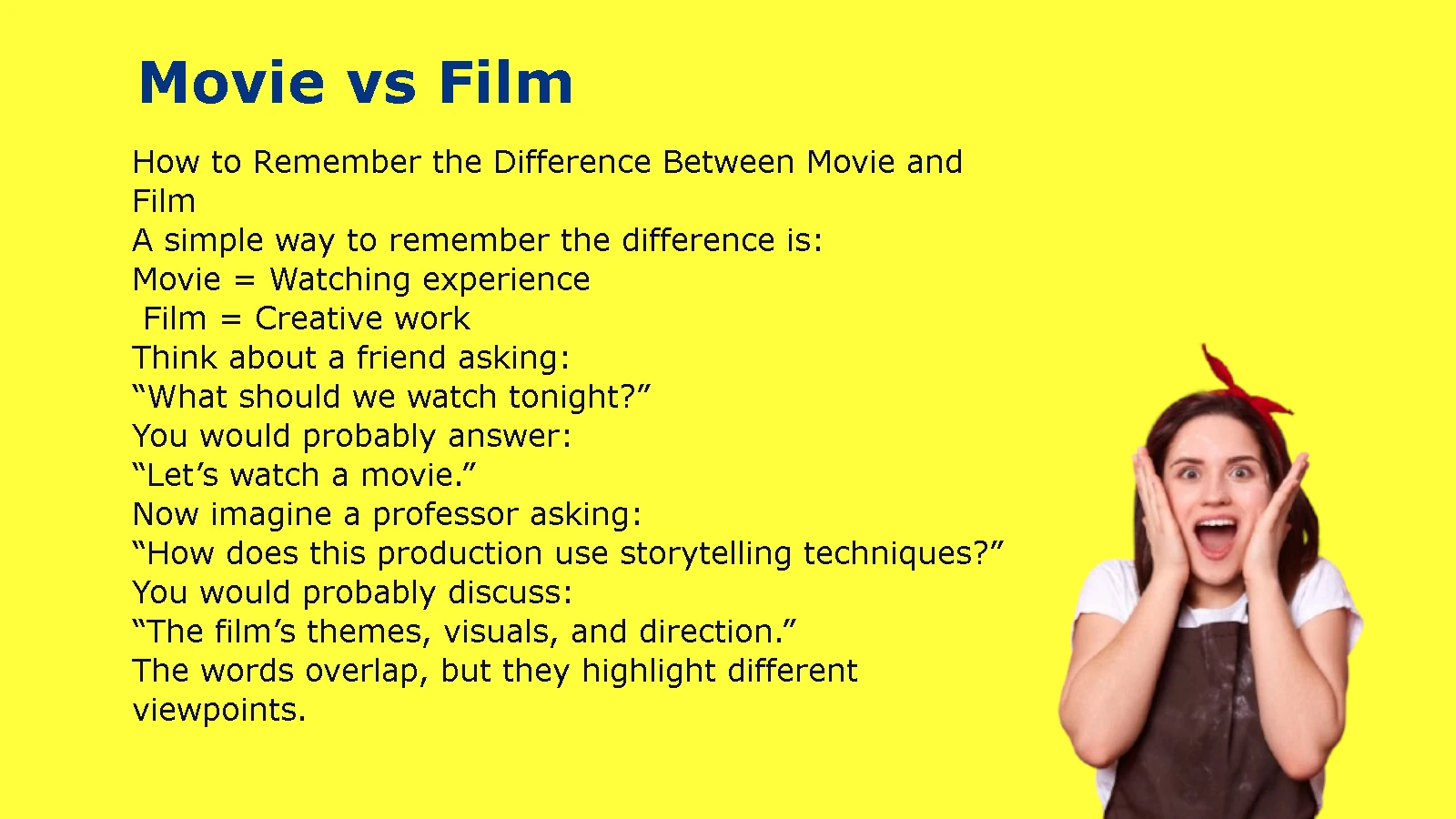
How to Remember the Difference Between Movie and Film
A simple way to remember the difference is:
Movie = Watching experience
Film = Creative work
Think about a friend asking:
“What should we watch tonight?”
You would probably answer:
“Let’s watch a movie.”
Now imagine a professor asking:
“How does this production use storytelling techniques?”
You would probably discuss:
“The film’s themes, visuals, and direction.”
The words overlap, but they highlight different viewpoints.
Why Both Words Continue to Exist
You might wonder why English keeps two words that mean almost the same thing.
The reason is that language often develops multiple words with slightly different feelings.
For example:
- Child and kid
- Home and house
- Start and begin
These words may share meanings, but people choose them based on tone.
The same applies to:
- Movie
- Film
“Movie” feels familiar and everyday.
“Film” feels more connected to the craft and study of cinema.
Both words remain useful because they serve different communication purposes.
The Role of Streaming Services in Movie and Film Usage
Streaming platforms have changed how people talk about visual entertainment.
Today, people watch productions through:
- Streaming apps
- Smart TVs
- Mobile devices
- Computers
Despite these changes, the difference between movie and film remains.
People still say:
- “I watched a movie on streaming last night.”
- “That film received great reviews.”
Streaming has expanded access, but it has not removed the difference in tone between the two words.
Movie vs Film in the Modern Entertainment Industry
The entertainment industry often uses both terms depending on the situation.
Common Industry Terms Using Film
Professionals frequently use:
- Film production
- Film festival
- Film director
- Film editing
- Film history
These terms focus on the creative process.
Common Industry Terms Using Movie
People often use:
- Movie theater
- Movie trailer
- Movie ticket
- Movie star
- Movie franchise
These terms focus on entertainment and audiences.
Examples From Real-World Conversations
Example One: Casual Conversation
Person A:
“Have you seen the new superhero movie?”
Person B:
“Yes, I watched it last weekend.”
The word “movie” fits because the conversation is relaxed.
Example Two: Film Discussion
Person A:
“What did you think about the director’s latest film?”
Person B:
“I thought the cinematography was excellent.”
The word “film” fits because the discussion focuses on artistic elements.
Example Three: Writing a Review
A casual review:
“This movie is entertaining and perfect for families.”
A professional review:
“This film demonstrates impressive character development and visual storytelling.”
Both are valid. The style changes.
Final Thoughts on Movie vs Film
The difference between movie vs film is not about one word being correct and the other being wrong.
Both words describe motion pictures.
The main difference is the feeling each word creates:
- Movie is casual, familiar, and commonly used in everyday American English.
- Film is often more formal and connected to art, criticism, and professional discussions.
When you are chatting with friends, recommending something to watch, or talking about entertainment, movie usually feels natural.
When you are analyzing storytelling, discussing filmmaking, or writing formally, film often works better.
The best word depends on your audience, your purpose, and the tone you want to create.
In simple terms:
A movie is something you watch. A film is something you can study, analyze, and appreciate as an art form.